Have you heard of a portfolio career? It’s a relatively new term in the English language, coined by Charles Handy in 1989 in his book The Age of Unreason. He envisioned this radical change to the job market where your identity and career is no longer defined by one employer. Rather, it’s a combination of multiple different roles, which could include a combination of employment by an organisation or self-employment. These different roles combine into your overall career.
I have never had just a job, but I didn’t have a name for that nor purposely chose that. It’s also not a workaholic thing and I’m definitely not advocating for an unhealthy work life balance. Quite the opposite: for me, this was the most fulfilling and balanced way for me to experience my career. Having experienced severe burnout and also having several non-career responsibilities, I appreciate everyone has different bandwidths. For me, a portfolio career helped me heal from burnout (see: ‘The fun factor’), but for others it may look different. I believe there is some value in anyone feeling disillusioned by their career, itching for change, or struggling to find a job, to consider building a portfolio career.
A job and career are different things. A job is one part of the whole career. At any given point there could be multiple jobs or roles. These all form the career when you put them together. In this blog, I’m not going into my personal portfolio, but I will discuss what its non-obvious advantages are.
Skills advantage
There are two broad categories a portfolio career could fall into (I’m simplifying here).
- Specialised: One is that most or all roles complement each other, largely towards a clear common focus. For me, my roles in @thedocsuitdebrief and my full time job in research are complementary, as are some of the other side roles I have that complement a research career. These roles give me a broad specialism in health research, but they give me different skills and ways of thinking. In one role I might think in a more business growth way, in another I may care more about impact, whilst another may be more focused on technical skills. But they are all focused on a common issue area and build my specialism in that area.
- Diversified: On the other hand, they could be different. In the past, I worked as a technology consultant whilst leading part of a foreign policy tank. Whilst on the surface these looked different, they provided me with different types of leadership skills that come in big and small organisations. They also helped me think in the intersection of multiple parallel worlds: I grew and developed the part of the think tank I founded and led using my consultancy skills, and brought my attention to detail and written aptitude into consulting. This is reminiscent of the ideas from the book Range: Why Generalists Triumph in a Specialized World, which I referred to here in my article on career additions.
In short, skills are cross-transferable, whether you change careers or run multiple at the same time.
The fun factor
Something we forget when we build our careers is that it’s allowed to be fun. I’m in a very blessed position where I get to say I love my career, but it didn’t come by chance. It came because I was proactive, I took risks and experimented, then found a combination that brought me the greatest joy, whilst fulfilling my practical needs.
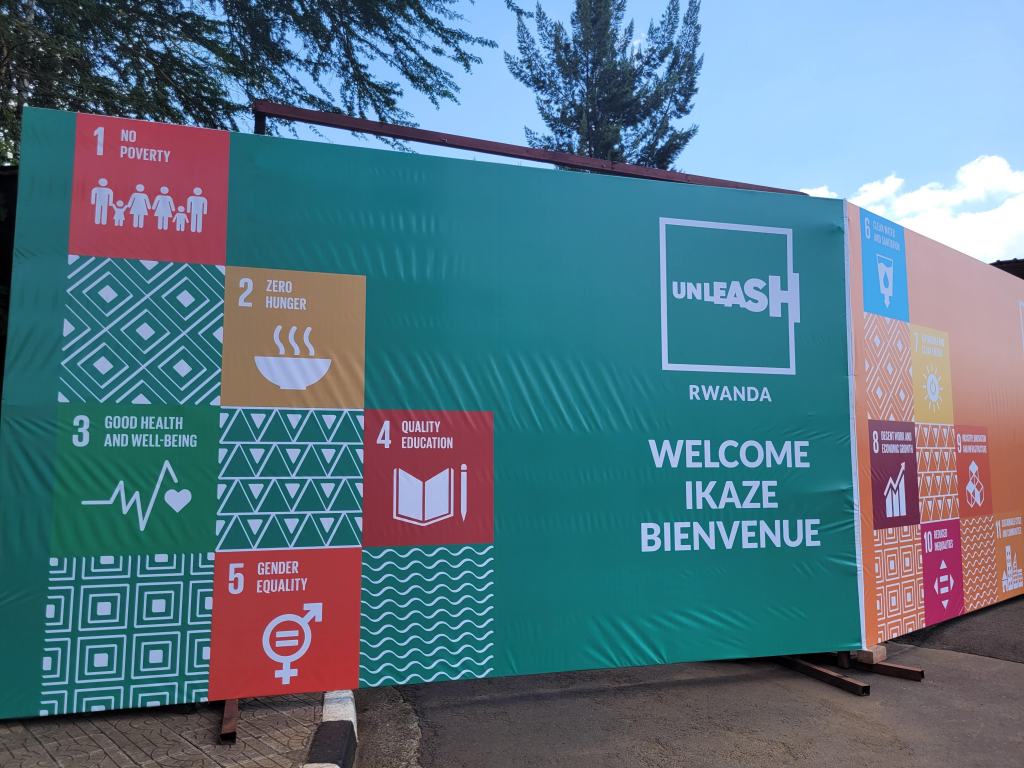
The bunch of cool things you’re into can absolutely count towards a career with huge responsibility and impact. Building a successful career doesn’t have to mean climbing a fixed ladder as quickly as possible. Some of the most impactful things I have done were when I was not chasing a ladder. I learned intensely during my 10 days in Rwanda on a fully-funded global leadership programme, when I lived in another country for a few months and worked in a social enterprise there, and through things I founded. They were also the places I made very interesting connections and friends, had a lot of fun, and still advanced in my career, but none of those things were on a traditional, linear path.
This all depends on how your career personally fits you. It needs to align with personal circumstances, values, and energy in order to be sustainable, and importantly fun. This is where some self- questioning could help as in my two-part series: “Making Decisions”.
For anyone considering building a portfolio career, I encourage them to reflect on what they want their life to look and feel like in aggregate, and ask themselves where a bit of fun could be added to their career.
Identity
One of the first things people ask when they meet a new person is what they do. But no one asks, what brings you energy, what’s your motivation in life, what’s a passion you have, what kind of person you want to be.
What if you aren’t just your job title? What if you have many paths? Maybe one earns you your living. Maybe another nourishes your soul. Maybe another gives you a platform to share your voice with the world. What if you don’t want to sit in the one dimensional box that the question of what you do places you in? Or what if you’re just tired of explaining what your job does or being defined by it?
We’re not job titles, but that’s how society values us. It can feel a bit isolating if you are discussing a portfolio career with people who don’t have one, especially if they find it hard to understand what that means or don’t realise you have many other roles beyond the one they define you with. However, a portfolio career is more likely to expose you to Granovetter’s “The Strength of Weak Ties” theory. This theory says that casual acquaintances can be more valuable than a close circle for finding new jobs, sharing ideas, bridging between networks, and seeing you beyond just one job title. Your portfolio career is likely to open the door to many new people – it certainly did for me – and those are ones who share your passions. That doesn’t mean you can’t have a close professional circle – you can and don’t lose who you have – but it broadens your networks way beyond what one job can do.
Closing thoughts
For some a portfolio career might include several part time jobs to create the equivalent of full time but in a more fulfilling ratio, for others it could be keeping a full time job with a side hustle (or a few). For some it might even be trialing another career whilst staying in the same full time job as before, maintaining financial stability whilst making space to try something new. In whichever format the portfolio career takes, it comes with several perks, such as rapid skills development, developing your identity beyond one dimension, and adding a lot of fun to your career.
In an economic climate where unemployment is high, people are burnt out, and the job market is especially tough right now, could a portfolio career be the new work culture?

