
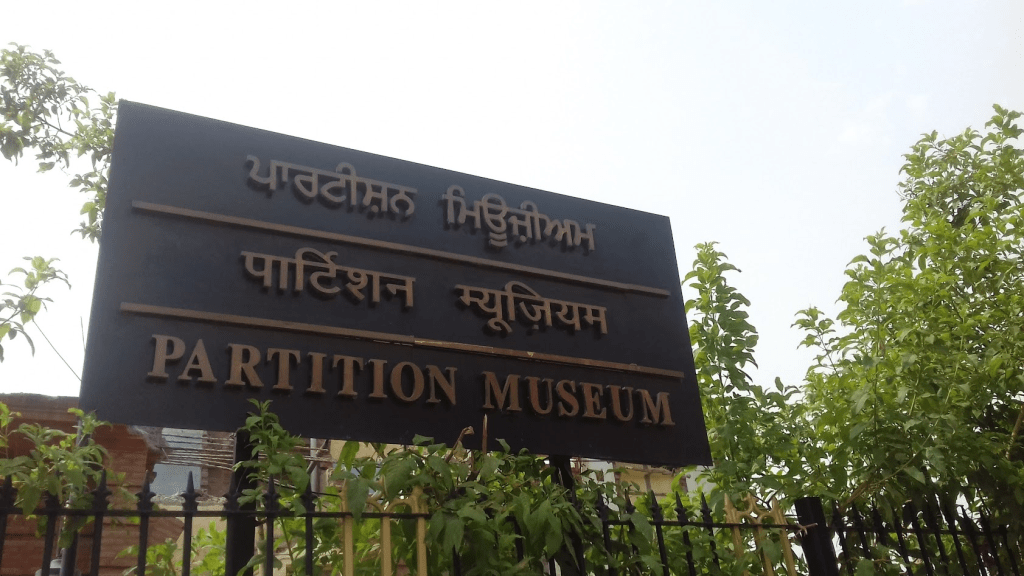
79 years ago in the middle of August, when India and Pakistan gained independence, we left home and never returned.
We had to get on a train or walk in one direction. Maybe the door was locked behind us, maybe not. What can we carry on our backs with small children too? We’ll return one day, it won’t be for long.
But one day never came again.
What happened
It is often referred to as the Partition of India, but India was actually split several times by the British. The Partition I refer to here is the one of Punjab, which split the state across present-day Pakistan and India, more than half in Pakistan, and the rest in India. It happened on the days that India and Pakistan gained independence from British rule. A day of celebration for some, but a day of killings, rapes, lost homes, and bloodshed for the state of Punjab. It was the largest forced mass migration in human history. It was darkness. It divided the state, families, and communities, between two countries. It broke homes that were never returned to.
The man who did it – Cyril Radcliffe – arrived in India only a month before partition happened. There was no consultation with anyone who lived there of where he should draw the line – or if there even should be a line.
I’m curious what our hometowns were like. I wish I could ask my grandparents what they remember of it. If they ever wanted to go back. If they genuinely thought we’d return home. I’m sure they did. How can you forget something you never have closure of because one morning you woke up and realised you’re suddenly in the wrong country?
The nearest I got to seeing it was when a friend of mine visited one of my grandparent’s hometowns whilst travelling. My friend sent me photos of Wazirabad, my maternal grandfather’s home, and for the first time I could see streets, people. My friend commented on how hospitable the area was. I like to think that was the same for my maternal grandfather’s family, back in pre-1947. He was only a small baby at the time. I’m grateful he, and I presume his family but I don’t know, made it over the border alive. His parents must have done a good job to carry a baby alive all that way.
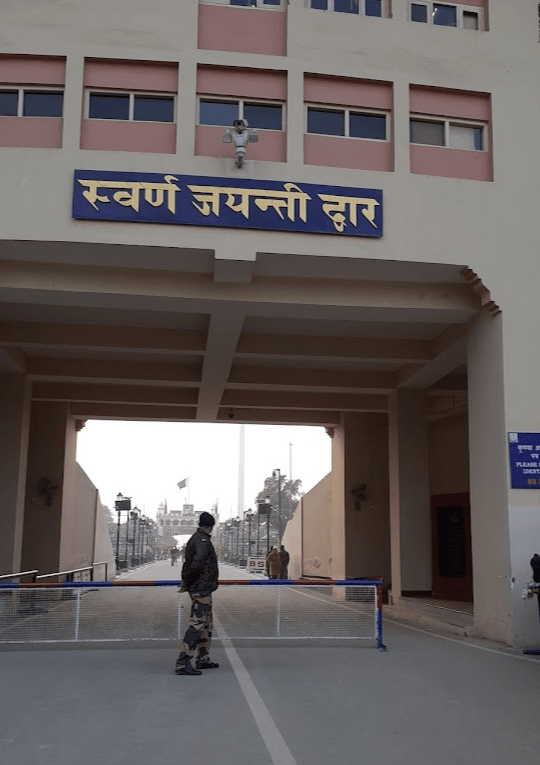
This is a photo from the Wagah border between India and Pakistan. It sits on the famous Grand Trunk (GT) road, roughly half way between Amritsar and Lahore. Under the arch in the distance is the Pakistan flag as seen from the Indian side, and two crowds sit opposite each other, with Indian and Pakistani military officials in between. It has become a bit of a tourist attraction today, famous for its daily evening flag lowering ceremony by the military. I visited it once, the nearest I got to visiting my grandparents’ hometowns. It’s performative, mostly, but Partition survivors know that it has an ominous history. I wonder where on the border my grandparents crossed. I don’t imagine the border was very well defined at the time given it was only just drawn.
Why we still talk about it
As it was 79 years ago, the stories are starting to be lost. But we still see the effects of the partition and the aftermath of India’s and Pakistan’ independence today. Bangladesh was only born in 1971, not that long ago. It is a personal story for a lot of South Asians in the UK, especially those from Pakistani, north India, or Bangladesh. They are Partition survivors themselves, or children and grandchildren of Partition survivors. We had to come to the UK. We lost our homes. There are 3 generations of people affected by Partition alive today, although the oldest were merely young children when it happened, as many, including their stories, have passed. Their stories are dying. There have been several movements to keep the stories alive and in memory, especially for the grandchildren – my generation – who are learning and expressing curiosity about what it was like and what happened. And where we descended from.
The UK and India have many historical ties due to colonialism. It’s this history that means that millions of Indians, Pakistanis, and Bangladeshis live in the UK today, after being called to come by the government to help rebuild the country post-war. But we forget history, and we are often reminded how even that isn’t home. I wrote about why we need colonial education here and why we need to recognise colonial history in policymaking here.
To learn more:
This blog was inspired after going on a walking tour with A Little History of the Sikhs and History CIC who both do incredible work on preserving and uncovering less spoken about history. They ran a Partition walking tour in London to show and interact with parts of London that contain Partition history (of which there is a lot).
Books:
- Shattered Lands: Five Partitions and the Making of Modern Asia – Sam Dalrymple
- Inglorious Empire: What the British Did to India – Shashi Tharoor
- The Psychological Impact of the Partition of India, edited by Sanjeev Jain and Alok Sarin
- Train to Pakistan by Khushwant Singh
- Midnight’s Children by Salman Rushdie
- The Night Diary by Veera Hiranandani
- Partition Voices: Untold British Stories by Kavita Puri
Podcasts:
- Empire: World History on Partition:
- BBC Three Pounds in my Pocket (about how post partition, many people including my grandparents arrived in the UK with only a pound or three to restart their life)
- Sam Dalrymple on the multiple partitions of India:
- Aanchal Malhotra, author of ‘Remnants of Partition’
Documentaries:
- Children of Partition: An Oral History of Pothoharis a Documentary by the Pothohar Association

