
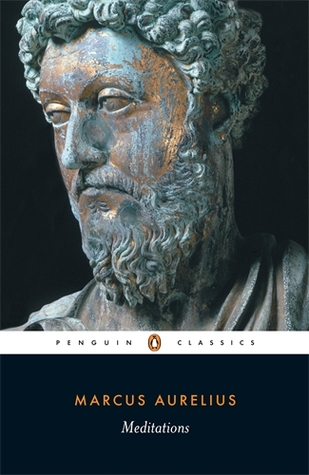
Quote of the book
“Dwell on the beauty of life. Watch the stars, and see yourself running with them.”
5 key points
- Aurelius frequently addresses what can make someone happy or unhappy, such as “those who fail to attend to the motions of their own soul are necessarily unhappy”
- Another common theme is death and mortality: “no one loses any life other than the one he lives” and “life is short: make your gain from the present moment”
- Aurelius emphasises the need for a “sense of urgency” in life, as it would all be over before we realise.
- There is value in quietness and contemplation: “no retreat offers someone more quiet and relaxation than that into his own mind”
- Aurelius advocates for a get up and do attitude, in line with his stoicism. For example, “Do I still resent it, if I am going out to do what I was born for, the purpose for which I was brought into the world?”
Review
As you can tell from the key points and quote above, this book is extremely quotable, so it was difficult to pick just one quote for my “quote of the book” section.
I am normally a bit sceptical of ancient philosophy books for fear that they would be written in archaic English, hard to follow, and explain simple concepts in an overly convoluted manner. However, I was pleasantly surprised with this one. I read Martin Hammond’s translation, which was clear, and I’ve heard Hays’ translation is also good. It was very simple to follow and relatable in the modern day. It was also a generally enjoyable read; for these reasons, I recommend this book to philosophers and non-philosophers alike.
Firstly, as an introduction, Aurelius was a stoic philosopher and was one of the most famous proponents of this type of philosophy. This philosophy studies human morality closely as a way of determining if a life is good. It also emphasises virtue and generally aligns with having emotional resilience against adversity. You may have heard of having a “stoic attitude”, which is derived from this philosophy. This attitude is clear in Aurelius’ thoughts too, such as “There is nothing to fear in the termination, the pause, and the change of your whole life” and “why not carry on rather than fret”.
The book is structured into subsections totalling 12 “books”, though even so the overall book is only a little over 100 pages in the version I read. This short and sweet book is full of practical wisdom and little reminders for when things feel too much, such as “do not let the future trouble you” and “view the rest of your life as a bonus”. If things feel impossible, Aurelius is here to remind you that you should “consider anything that is humanly possible and appropriate to lie within your reach”.
I think there are two ways of approaching this book. One way is to read it cover to cover. The other is to refer to sections of the book depending on what feels relevant to you or to flick through every now and then. Bear in mind that Aurelius wrote this book as a series of spiritual reflections he had whilst he tried to make sense of the world, so it does not flow coherently. This is not a bad thing and it does not take away from the book’s content or messages, but it is useful to approach the book with this in mind; it helps with managing expectations. It is generally doubted whether Aurelius ever even intended for this book to be published, as it was written as a guide for his own self-improvement. However, there were many messages in this book that could be applicable to anyone seeking a little philosophical guidance.
Overall, I encourage anyone to give this book a chance and to not be intimidated by the idea of reading ancient philosophy. It is a book full of wisdom and a fun one to read.
Overall rating: ⭐⭐⭐⭐⭐
 Preeti Kaur