
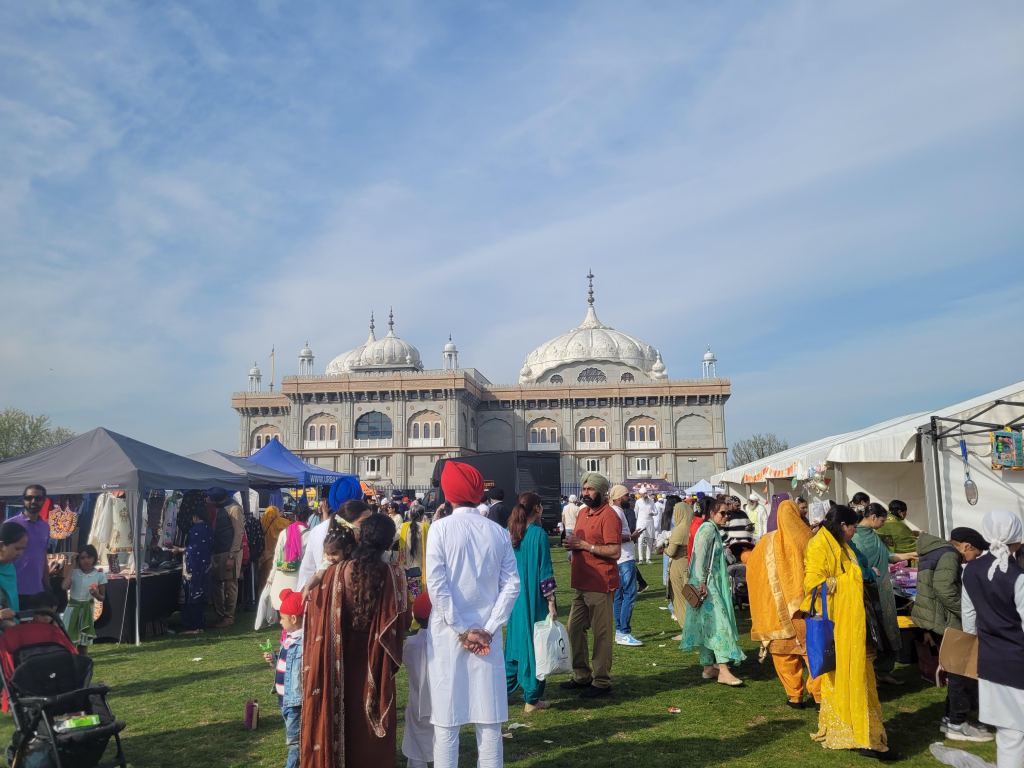
What makes Vaisakhi so special?
Vaisakhi falls on April 13th (the first day of the Punjabi month of Vaisakh), and is an important day for Sikhs marking the birth of the Khalsa, a community of Sikhs, committed to justice, equality, and service.
In 1699, Guru Gobind Singh Ji asked for five volunteers who were willing to give their lives as a test for courage and faith. They did not actually die. Instead, they became the Panj Pyaare (the five Beloved Ones) and their names remind us of what the Khalsa means:
Bhai Daya Singh: compassion and kindness
Bhai Dharam Singh: righteousness and duty
Bhai Himmat Singh: courage and bravery
Bhai Mohkam Singh: firmness and discipline
Bhai Sahib Singh: being noble and honourable
They are a reminder of our duty to stand up for justice, people’s rights to exercise religious freedom, and the Sikhi teaching to remain in Chardi Kala (eternal optimism) in the face of hardships.
Vaisakhi also reminds us of Seva – to selflessly serve humanity. Everyone is treated as a human being of equal value to one another, irrespective of religion, race, sociodemographic background. I learned at one of the Vaisakhi events I attended this year that when there were floods in Cornwall a few years ago, Khalsa Aid were the first ones there to help, which is honoured by the residents of Cornwall every year. Elsewhere, Khalsa Aid is on the ground helping people in Gaza, Myanmar, and 40 countries in need of assistance. This encapsulates what we are taught by Guru Gobind Singh Ji: to recognise everyone in the human race as one. Seva also ensures no one goes hungry, since all gurdwaras serve everyone with no questions asked, a free, hot, vegetarian meal.
Vaisakhi reminds us how powerful we can be as a community if we come together, be brave, and stand up for justice.
A turning point in history
Vaisakhi also marks the anniversary of a turning point in British history: the Jallianwala Bhag massacre.
In World War I 1914-1918, around 1.5 million Indian soldiers joined the British army to help Britain fight in the war. Of these, more than 50% were from Punjab. It reflects the extent to which the British army relied on Indian, and particularly Punjabi soldiers, for the war. Britain promised India, and especially Punjab, greater autonomy and a recognition of the sacrifices made, in exchange for soldiers.
However, there was a betrayal of this promise. Merely a year after WWI ended, the 1919 Rowlatt Act was implemented which allowed Indians to be imprisoned without any trials and limited their political freedoms.
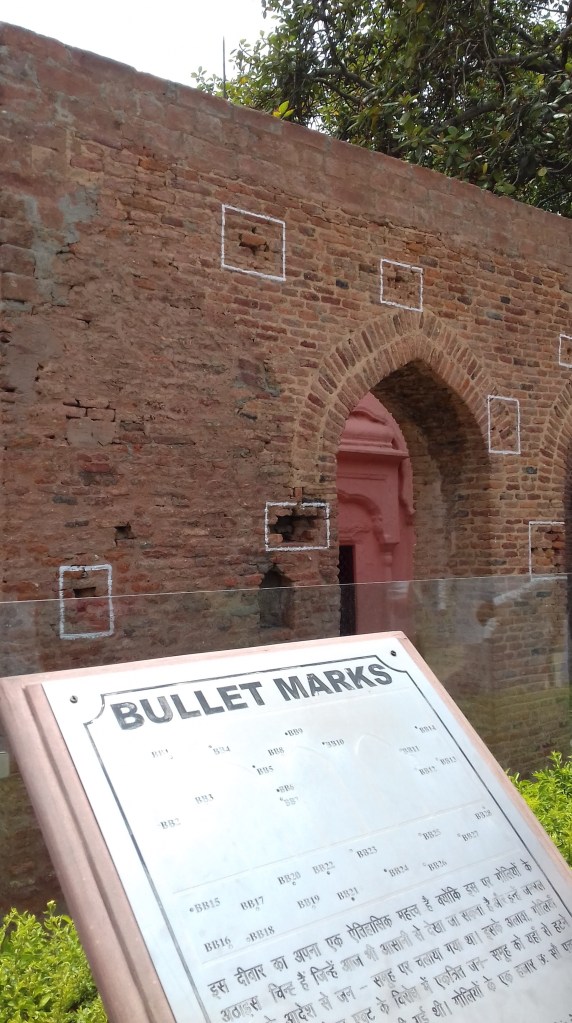
On April 13th, 1919, British general Dyer opened fire at a crowd of unarmed, innocent families, and without warning They were gathered in the Jallianwala Bhag, a public park in Amritsar, Punjab, in peaceful protest of this Act and to celebrate the Punjabi harvest festival of Baisakhi. Some people jumped to their death into a well to escape the firing, later called Martyr’s Well, where 120 bodies were recovered from. To put it into perspective, the park is smaller than Trafalgar Square, with hardly any escape routes. Bodies piled up and people were crushed as they tried to escape, but Dyer continued to shoot where it was most crowded. Dyer originally wanted to use a machine gun, before he realised it didn’t fit in the narrow alleyways around the park, which reflects the extent of the brutality he intended to cause. In total, 1,650 rounds were fired, with Dyer claiming he only stopped firing because he ran out of ammunition.
The exact death toll is unknown, ranging from a few hundred to over a thousand, with the youngest believed to be a few weeks old. The irony of it falling on the day of Vaisakhi, a day which reminds us of the freedom for our rights, doesn’t go amiss with this tragedy that oppressed these innocent people.
That park is still open today, as a sobering memorial and a public park. This picture is from my visit to the park a few years ago.
The massacre was condemned by Winston Churchill who called it a “monstrous event” and in 2019, Theresa May called it a “shameful scar”. The Archbishop of Canterbury visited the park and prostrated there, apologising for the “great wickedness”. In March 2025, the Conservative MP Bob Blackman brought up the topic of the Jalianwala Bhag massacre and asked the UK government to formally apologise. But the British Government is yet to apologise for it, nor is the British empire widely taught in British schools – not at all in my history classes.
Following the massacre, revolutionaries like Chettur Sankaran Nair, a prominent Indian lawyer who reached high government positions that were hardly open to Indians back then, displayed fearlessness and courage by fighting a legendary courtroom battle to condemn the actions of Dyer. Sardar Udham Singh was another revolutionary, who avenged the Amritsar massacre, by assassinating another Lieutenant who approved Dyer’s actions.
These events following Vaisakhi 1919 were a turning point for India’s struggle for independence, the exposure of brutality of the British empire, and set the foundation for the eventual independence of India and collapse of the empire.
The relevance for today
This makes Vaisakhi an opportunity for us to learn our shared global history and to remember what change we can make if we come together as a collective. It’s increasingly important in a world with still so much war and inequality.
If we see an injustice, we should stand against it, question the status quo, and empower those who don’t have the same privilege, in the same way that the Panj Pyaare taught us, and history taught us after that. It’s an opportunity for fostering a society that cares.
 Preeti Kaur