
Conference reflections
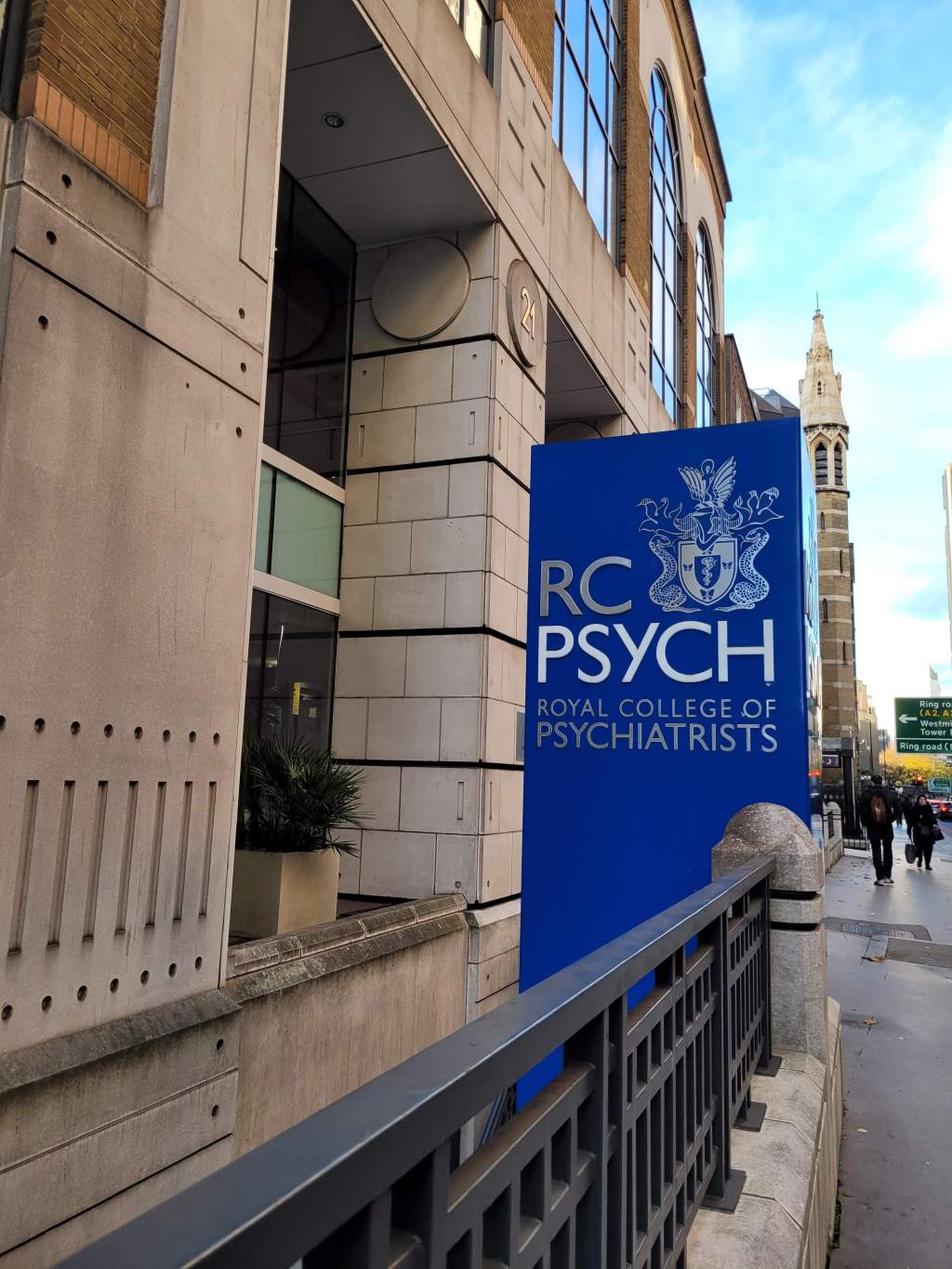
I had the pleasure of attending the faculty of Rehabilitation and Social Psychiatry’s conference at the Royal College of Psychiatrists recently, after being selected for the faculty’s Psych Star fellowship for this upcoming academic year. It feels like a perfect amalgamation of the different disciplines I enjoy, bringing together my social sciences background with my passion for healthcare.
What is rehabilitation and social psychiatry?
Rehabilitation and social psychiatry is a speciality of psychiatry which focuses on people who have complex, long-term mental health conditions. Psychiatrists in this field work closely with patients and the local community in order to help patients integrate into the community following long-term inpatient care, and improve their long term quality of life. This emphasis on long term quality of life, in other words the patient’s recovery, is greater than only focusing on symptom management.
The patients who might interact with rehabilitation services the most are likely those who have been facing long term or complex psychiatric conditions or with long term contact with various mental health services. This means that effective treatment of their conditions requires an understanding of the patient’s whole context.
This speciality of psychiatry has a greater emphasis on working with not just the patient, but treatment plans also incorporate their families, friends, places of study and work, as well as their values and beliefs. This ensures that the patient is treated as a holistic person against their whole context, and not just a set of symptoms on a hospital ward. Rehabilitation and social psychiatrists may work with organisations that are associated with or could help the patient, such as community based organisations.
My takeaways from the conference are:
- The patient is centre. The thing that drew me the most to social psychiatry is its emphasis on seeing the person in the context of their society. The treatments in this area of psychiatry are also community based. One example that stood out to me from the conference was the role of gaming to get the patient to explore themselves as a form of therapy. This builds upon Frame Theory, which explores that the way people interpret information is influenced by the presentation of the issue. In this context, the player is in the context of the game, their character that they are taking on for the purposes of the game, and any therapeutic interventions that they undertake. Through these connections, the researchers and psychiatrists who presented this theory noted how feelings can exchange between the player and the character and vice versa, which they termed emotional permeance.
- There is emerging but limited research on health inequalities in psychiatry. A few talks brought up these themes in the conference, such as the HAY – How Are You, Peterborough? initiative, which is an online platform to increase contact between people and to reduce health inequalities. The MOZART study (Osimo et al., 2023) gives an approximation of the true risk of the patient having what is termed treatment resistant psychosis, by using variables such as age, sex, ethnicity, and inflammatory and metabolic blood markers of a patient. Moreover, I was taken aback by the statistic that patients from ethnic minority backgrounds are 4x more likely to be detained under the mental health act than those who are not (Barnett et al, 2019). The reasons cited for this include a higher rate of psychosis, which is something which should be explored for why that is, the higher perceived risk of violence, absence or mistrust of GPs, racial trauma, and other ethnic minority related disadvantages. These ethnic groups are also over-represented in crisis and secure services, but under-represented in treatment, which is a cause for concern for its increase in health inequalities.
- The need in psychiatry for research. I was particularly drawn to the needs for health economics and good data. For example, the GIRFT (Get It Right First Time) programme places emphasis on having a good, accessible national dataset in order for stakeholders to offer the best patient care and so that funding can be diverted in a way that supports the best outcomes for patients. One key area of focus is better housing, which will eradicate tenancy associated risks, reduce hospital waiting times, and reduce the cost of placement delays. Better data will allow for funds to be directed where they are needed, such as better housing, as well as improve the system alignment between different pathways of care for the patient. Economics can also help to understand the cost effectiveness of different categories of care, whether inpatient in NHS services or outpatient in community based services.
- The conference highlighted key areas of priority for mental health over the next few years. For example, there is a need for greater equity in SMI (Serious Mental Illness) services, particularly from the findings of the racial inequality report, and a greater emphasis on better rehabilitation services for those with high risk. Another area of priority is for more research in mental health, focusing on the Ten Year Plan and the Darzi review. This should include improved patient flow to meet the increased demand for services since the pandemic, a move from hospital to community based care where it is appropriate and beneficial, and to speak the language of policymakers to make these changes come into fruition. There are challenges here too: this includes tackling the scale of the treatment gap and the gap in early interventions of treatment.
- The impact of patient suicide on clinicians. One of the talks explained the processes behind patient suicide, including that it could be an acting out event, where the person doesn’t even know they’ll do it before it happens, that it could be impulsive, and there could be mystery surrounding the reasons for why someone dies by suicide. One point that was made here was that sometimes suicide could result from an incapacity to mourne – oftentimes events such as a loss, bereavement, or domestic violence precede suicide attempts. I thought it was important that it was noted in the talk that suicide is a human condition not a mental health conditions, which makes it a public health issue and requires more discussion in public discourse. The speaker also emphasised how it is no one’s fault when someone dies by suicide. In reality, a clinician will never know the true reasons why it happened. In the job of a psychiatrist, there is emphasis on trying to find reasons, but this can never be predicted (Gibbons, 2024).
 Preeti Kaur