
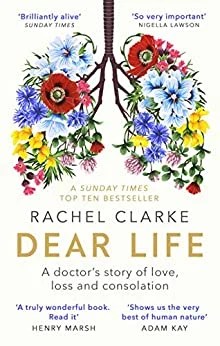
Quote of the book
“Grief, like love, is non-negotiable, and that the only way to avoid the pain is to opt out of ever loving.”
5 key points
- Clarke places importance on empathy and humanity in palliative care.
- Despite working with patients who are near the end of their lives, Clarke describes her environment as being full of life and she explains why this is.
- She makes a powerful case for the UK government to pay attention to how society treats the elderly and dying.
- In general, people live as though time is in abundance and the only difference between this and people with terminal illness is that those with terminal illness know that their time is soon to be up.
- Everyone matters and everyone can live until the moment they die.
Review
Rachel Clarke is a palliative care doctor, who worked as a journalist before retraining as a doctor. She shares her personal and professional journey with the reader through this transition and her eventual specialisation in palliative care. She picked this specialism because of its patient-focus, rather than focus on the disease. She explains how it is the human story which matters in both medicine and journalism. Her father, a doctor, was diagnosed with terminal cancer, who she talks about at the start and comes back to at the end. This book is incredibly moving, honest, and well-written, but it is not a light read with its heart-wrenching themes.
Most of the book is focused on her work in palliative care in the hospice, but the first few sections cover her transition from journalism to medicine with its many similarities and her time in medical school. She talks about the competing expectations of doctors to put aside their emotions but also show compassion and empathy.
The book is not just a memoir as it cleverly combines philosophy and medicine in a way that is accessible to all audiences. It explores a range of ethical and practical issues, offering an insight into what goes on inside a hospice, care of the elderly, perspectives towards terminal illness, and ultimately how much empathy and humanity is valued in palliative care.
Although there is terminal illness and death in a hospice, Clarke instead found that there is an abundance of love, compassion, and kindness there, which has taught her about life. Clarke notes it is the urgency of limited time and the knowledge that time is almost up once someone becomes terminally ill that offers the alternative perspective on life. Life is then lived more fiercely. She learned that every last second of life matters, sharing stories of a birthday party for a dying patient and a wedding for a patient who is dying of breast cancer. Her patients have taught her to cherish and make the most of every last moment.
There are also themes of loss and grief, including her very personal story of her father. He had been an inspiration and support to her, even once their roles reversed and she became his carer when he fell ill. She explains the difference between working in a hospice and being around death and the grief of losing a family member.
This book is very emotional and it is a must-read for all audiences to gain an inspiring perspective on life that will stay with the reader long after the cover is shut.
Overall rating: ⭐⭐⭐⭐⭐
 Preeti Kaur